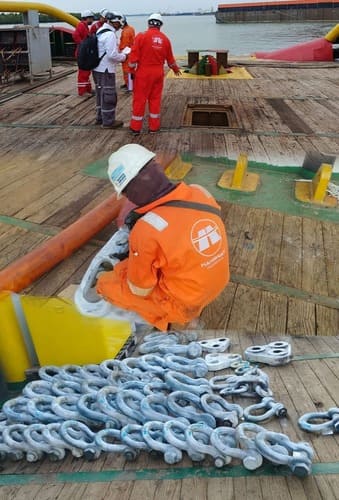
Magnetic Particle Inspection (MPI) on Shackles: Ensuring Safety and Reliability
Magnetic Particle Inspection (MPI) on Shackles: Ensuring Safety and Reliability
Shackles play a critical role in lifting, towing, and securing operations across industries such as construction, marine, and transportation. Given their essential role, it’s vital to ensure that shackles are free from defects that could compromise safety and performance. Magnetic Particle Inspection (MPI) is one of the most effective non-destructive testing (NDT) methods for detecting surface and near-surface flaws in ferromagnetic materials. This article covers the importance, process, and benefits of MPI on shackles to ensure safe operations.
1. What is Magnetic Particle Inspection (MPI)?
MPI is a non-destructive testing method used to identify surface and slightly subsurface defects in ferromagnetic materials. It works by magnetizing the material and applying magnetic particles—either dry powder or suspended in liquid—across the surface. If a flaw such as a crack or void is present, it disrupts the magnetic field, causing the particles to gather at the defect, making it visible for inspection.
2. Why is MPI Important for Shackles?
Shackles are subjected to heavy loads, constant stress, and extreme environmental conditions. Cracks, corrosion, or other defects can develop over time, potentially leading to failure. MPI ensures that these defects are detected early to avoid accidents. Some key reasons MPI is essential for shackles include:
- Safety: Defective shackles can cause catastrophic accidents, especially in lifting operations.
- Compliance: Many industries require periodic inspection of lifting equipment, including shackles, to meet safety regulations and standards.
- Reliability: Regular inspection ensures shackles remain in optimal working condition, minimizing downtime.
- Cost-Efficiency: Detecting defects early reduces the risk of costly repairs or equipment replacement.
3. MPI Process on Shackles
Step 1: Preparation
- Cleaning: The shackle’s surface must be cleaned to remove dirt, grease, and rust. This ensures that the magnetic particles can adhere properly.
- Demagnetization (if needed): If the shackle was previously magnetized, it needs to be demagnetized before the test to prevent interference with the results.
Step 2: Magnetization
The shackle is magnetized using one of the following methods:
- Direct Magnetization: An electric current is passed through the shackle, creating a magnetic field.
- Indirect Magnetization: A magnetic yoke is placed on the surface of the shackle to induce a magnetic field.
Step 3: Application of Magnetic Particles
- Dry Method: Fine magnetic powder is sprinkled over the surface.
- Wet Method: Magnetic particles are suspended in a liquid and applied through spraying or immersion.
Step 4: Inspection
The inspector observes the shackle under visible or UV light (if fluorescent particles are used) to detect particle buildup, indicating a defect.
Step 5: Demagnetization and Cleaning
After inspection, the shackle is demagnetized to prevent residual magnetism, which could attract metal particles during use. The surface is also cleaned to remove remaining magnetic particles.
Step 6: Documentation
The results of the inspection, including the presence of any defects, are documented. If defects are found, recommendations for repair or replacement are provided.
4. Types of Defects Detected by MPI on Shackles
MPI is highly effective at identifying the following types of defects:
- Cracks from stress or fatigue
- Porosity from manufacturing flaws
- Seam defects along the surface
- Laps and folds resulting from improper forging or machining
- Corrosion pits that compromise the integrity of the shackle
5. Benefits of MPI on Shackles
- Accurate Detection: MPI can reveal even small surface and subsurface defects that might go unnoticed by visual inspection.
- Quick and Efficient: The process is relatively fast, allowing for minimal downtime during inspections.
- Non-Destructive: MPI does not damage or alter the shackle, preserving its usability.
- Cost-Effective: Early detection of defects prevents more expensive repairs or replacements.
- Compliance with Standards: Many industries require MPI as part of their safety compliance for lifting equipment.
6. Limitations of MPI on Shackles
While MPI is highly effective, it does have some limitations:
- Only for Ferromagnetic Materials: MPI can only be used on materials such as steel, so it is not suitable for non-ferrous shackles.
- Surface Preparation Required: Dirty or rough surfaces can affect the accuracy of the inspection.
- Limited Depth Detection: MPI is effective for surface and near-surface defects but cannot detect deep internal flaws.
7. Best Practices for MPI on Shackles
- Regular Inspections: Schedule MPI at regular intervals, especially for shackles used in heavy-duty operations.
- Qualified Inspectors: Use certified inspectors to conduct MPI for reliable and accurate results.
- Record Keeping: Maintain detailed records of inspections to track the condition of shackles over time.
- Follow Manufacturer Guidelines: Adhere to the manufacturer’s recommendations for inspection frequency and load limits.
8. Conclusion
Magnetic Particle Inspection (MPI) is an essential tool for ensuring the safety and reliability of shackles used in various industries. By detecting surface and near-surface defects early, MPI helps prevent accidents, ensures compliance with safety regulations, and reduces downtime. Regular MPI inspections, combined with proper maintenance, can extend the life of shackles and contribute to safer working environments.
Investing in high-quality MPI services for shackles is a small price to pay compared to the potential risks and costs of equipment failure. Whether in construction, marine operations, or industrial lifting, MPI plays a crucial role in keeping operations safe and efficient.
9. Frequently Asked Questions (FAQs)
Q1: How often should shackles undergo MPI inspection?
It depends on usage and industry standards. However, shackles used frequently in heavy-duty operations should be inspected at least once a year or whenever damage is suspected.
Q2: Can MPI detect all types of defects in shackles?
MPI is excellent for surface and near-surface defects but may not detect deep internal flaws. For internal inspections, other NDT methods like ultrasonic testing may be required.
Q3: Is MPI mandatory for lifting equipment like shackles?
In many industries, MPI is required by safety standards and regulations to ensure the integrity of lifting equipment.
Q4: Can MPI be performed on painted shackles?
No, the paint needs to be removed for MPI to be effective, as coatings can obstruct magnetic particles from settling into cracks or flaws.
Q5: What happens if defects are found during MPI?
If defects are detected, the shackle should be repaired or replaced, depending on the severity of the damage and manufacturer guidelines.
Leave A Reply